Your first pickleball tournament: what nobody tells you
May 4, 2026
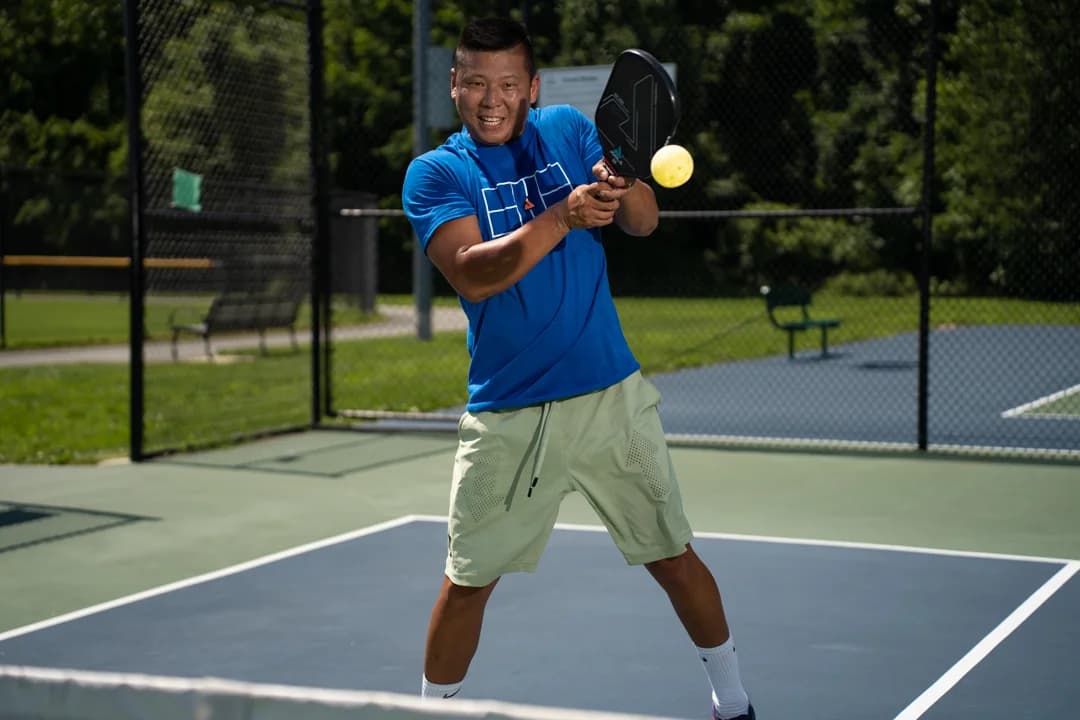
Most rec players never sign up for a tournament.
The ones who do, level up faster than the ones who don't. It's the single highest-leverage thing you can do for your game.
But there's a reason most players never pull the trigger: they don't know what they're signing up for. The websites are confusing. The format jargon is opaque. The whole thing feels like a club that has rules you're supposed to already know.
Here's what your first tournament actually looks like, and what nobody tells you before you walk in.
1. The 4.0s aren't in your bracket.
The single biggest fear I hear from players considering their first tournament: "I'll get destroyed by some sandbagger and embarrass myself."
You won't. You'll be playing 3 to 5 matches against players within a tenth or two of your DUPR. That's the entire point of the rating system. Yes, occasionally somebody plays down — but they're at every event, and you'll see them once. The other 90% of your matches will be reasonable, competitive games against players exactly your level.
Pick a bracket your DUPR actually supports. Don't play down to feel safe; you'll play 3.0s with 2.5 hands and learn nothing. Don't play up to be brave; you'll get rolled and not enjoy it. Play your level.
2. The format will confuse you. Read it twice.
Most tournaments are either:
Your tournament page will say which format. Read it. Then read it again. Knowing whether one bad game knocks you out vs gives you four more chances completely changes how you play game one.
3. The first game is always weird.
Cold gym. Different ball. Different court bounce. Your warmup partner had to leave. Your real partner just got there. The ref is using terms you've never heard. Your serve goes into the net.
This happens to everyone. Don't panic.
The advice I give every first-timer: lose your first game on purpose, in your head. Treat it as a warmup. Whatever the score, your job for the first game is to find your timing, get used to the environment, and stop overgripping the paddle. By game two, you're playing your actual game.
The players who win their first tournament aren't the ones who play their best in game one. They're the ones who don't spiral in game one.
4. Pick your partner like a co-founder.
Most first-timers grab whoever's available. That's fine — go play. But if you want to actually do well, pick a partner whose game complements yours, not duplicates it.
The single most important thing in doubles: one of you can hit a third-shot drop reliably. If neither of you can, you'll get pinned at the baseline every point. If both of you can, great. But if you're choosing between a partner who returns deep and one who has the same forehand bang as you do — pick deep returns.
Talk before the match. Pick a stack (or don't). Decide who calls outs. Decide who takes the middle. Two minutes of talk fixes most of what goes wrong.
5. The lesson is in the matches you lose.
You will lose. Probably more games than you win, your first time out. That's not a bug.
Watch how you lost. Did you serve into the net under pressure? Did you bail to the baseline at 9-9 and stop hitting drops? Did your speedups float when you got nervous? Each of those is a coachable thing — and now you have a real, specific situation to drill before the next one.
Tournament losses are the most valuable feedback in the sport. Open play tells you nothing because nobody is trying to win. A tournament loss tells you exactly what falls apart under pressure.
Bring a notebook. Write down what broke. Drill it for the next 6 weeks. Sign up for the next one.
How to actually pull the trigger
If you're nodding through this, here's the move: find a tournament 6–8 weeks out and sign up tonight. Not next week. Tonight. Having a date on the calendar will change how you practice for the next 6 weeks more than any drill, lesson, or YouTube video could.
If you want help getting tournament-ready, that's exactly what a 4-session private package is for. We pick the shots that fall apart under pressure for you (not for some generic 3.5), drill them under increasing match pressure, and get you to the start line with a plan. Most of my 4-pack tournament-prep clients don't win their first event — but every single one comes out of it with a clear next step.
If you're not sure where you stand or what to drill, book a private lesson. I'll watch you hit, give you a baseline DUPR estimate, and tell you which bracket to play and what to drill before the entry deadline.
Want to work on your game with Coach Sam?
See Coaching Options →