Why open play stops working at 3.0
May 4, 2026
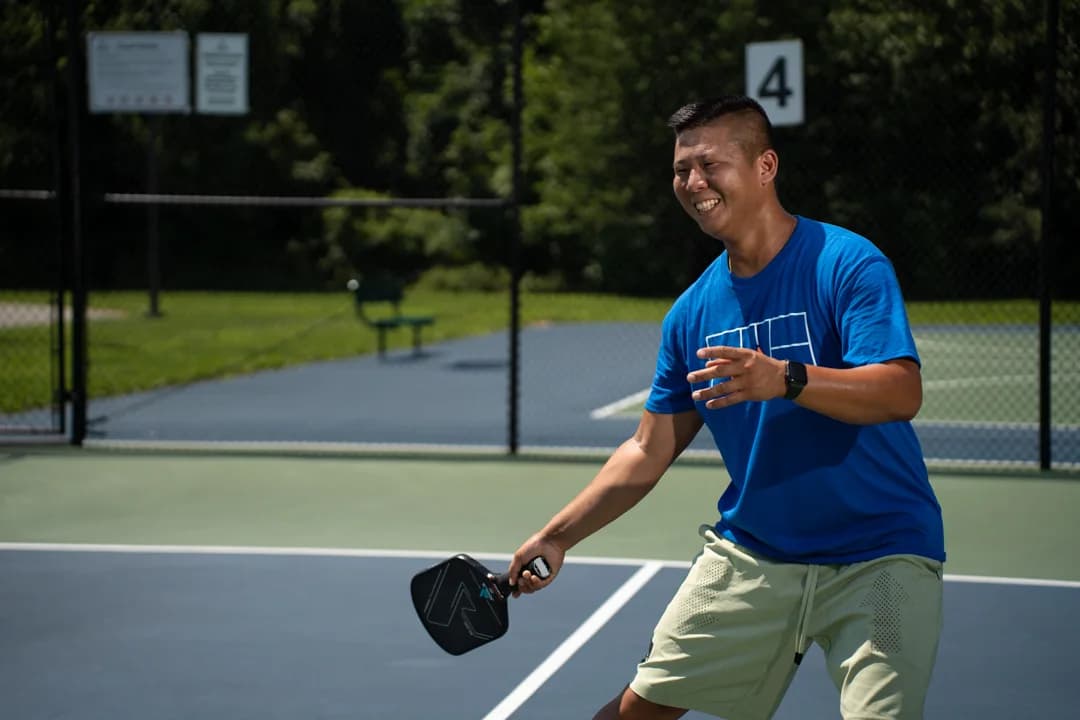
You started showing up to open play because somebody told you it was the fastest way to get better.
They were right — for a while.
When you didn't know how to keep score, every session taught you something. When your serve was inconsistent, every game gave you reps. When you were still figuring out the kitchen rule, every point was a lesson.
Then you hit ~3.0 DUPR, and the lessons quietly stopped.
You still leave open play tired. You still feel like you played hard. But your rating hasn't moved in three months, your kitchen game still feels janky, and the 3.5s you keep losing to don't seem to be doing anything you couldn't do.
So what changed?
Open play has a built-in skill ceiling
Open play is random reps under no pressure to fix anything. That's a feature when you're new — you need the volume. It becomes a problem the moment you need precision.
Three things stop happening at 3.0:
1. You stop getting hard reps on your weak shots.
You've quietly built a game that hides your weaknesses. You poke a forehand instead of driving. You lob instead of dropping. You bail to the baseline instead of holding the kitchen line. Open play lets you win points doing this, so you keep doing it. The shots you actually need at 3.5 — the third-shot drop, the reset off pace, the punch volley — never get touched.
2. You stop getting feedback.
Open play partners are nice. They want to keep playing. They are not going to stop the game and tell you that you're closing the kitchen line two steps too late and that's why every dink rally ends with you reaching. Without feedback, mistakes calcify into habits.
3. You stop being uncomfortable.
You play the same 4.0 friend who carries you. You avoid the 3.5 lefty whose serve eats you alive. You play your favorite side. Growth lives in the uncomfortable rep — and open play, at 3.0, lets you skip it.
What 3.5+ players actually do
Every 3.5 player I coach has the same story: at some point, they stopped trusting open play to get them better. Not because open play is bad — most of them still play it three times a week — but because they added something else.
The "something else" is almost always one of three things:
That's it. There is no fourth secret. Open play stays in the mix; it stops being the only thing.
How to break the 3.0 plateau in 30 days
You don't need to overhaul your life. You need three things:
1. Get an honest baseline. Most 3.0s I evaluate are wrong about what's holding them back. They think it's their backhand. It's almost never their backhand — it's their footwork into the kitchen, or the height of their drops, or their return depth. One hour with a coach will tell you which one.
2. Pick one shot. Drill it for 20 minutes a week. That's it. One shot. Twenty minutes. Most 3.0s try to fix everything at once and fix nothing. Pick the one with the highest leverage (a coach will name it in a session), find a wall or a willing friend, and grind it.
3. Sign up for a tournament 8 weeks out. Even a rec-level one. Having a date on the calendar changes how you show up to every practice between now and then.
Where I come in
If you're stuck at 3.0 and you read this and recognized yourself, the move is simple: book a private lesson. I'll watch you hit, give you a baseline DUPR estimate, and hand you a one-page written plan with the specific shot to drill, the specific drill, and the order of operations to break through.
You'll walk out with a real plan and an honest read on where you are. If it's a fit from there, we'll keep working together.
Want to work on your game with Coach Sam?
See Coaching Options →